The Short Answer
If your main problem is tight shoulders, postural soreness, jaw clenching, or stress-related muscle tension, massage is usually the simpler first step. If your pain has lasted for months, keeps returning, involves headaches, feels widespread, or does not behave like ordinary muscle tightness, acupuncture may be the more appropriate first complementary option.
For many chronic pain clients, this is not an either-or decision. Acupuncture and massage work differently. Acupuncture is often chosen for pain modulation and nervous-system sensitivity. Massage is often chosen for touch-based relief, muscle comfort, and a clearer sense of ease in the body.
Start With the Pain Pattern
Chronic pain is not just long-lasting acute pain. After weeks or months, pain can be shaped by tissue irritation, stress physiology, sleep, movement habits, inflammation, previous injury, mood, and nervous-system sensitivity. That is why the right choice depends less on the label and more on how the pain behaves.
Choose acupuncture first when pain is persistent, recurrent, hard to localise, headache-related, or mixed with sleep disruption and sensitivity. Choose massage first when symptoms are mostly muscular, local, and responsive to pressure, heat, stretching, or rest.
When Acupuncture Makes More Sense
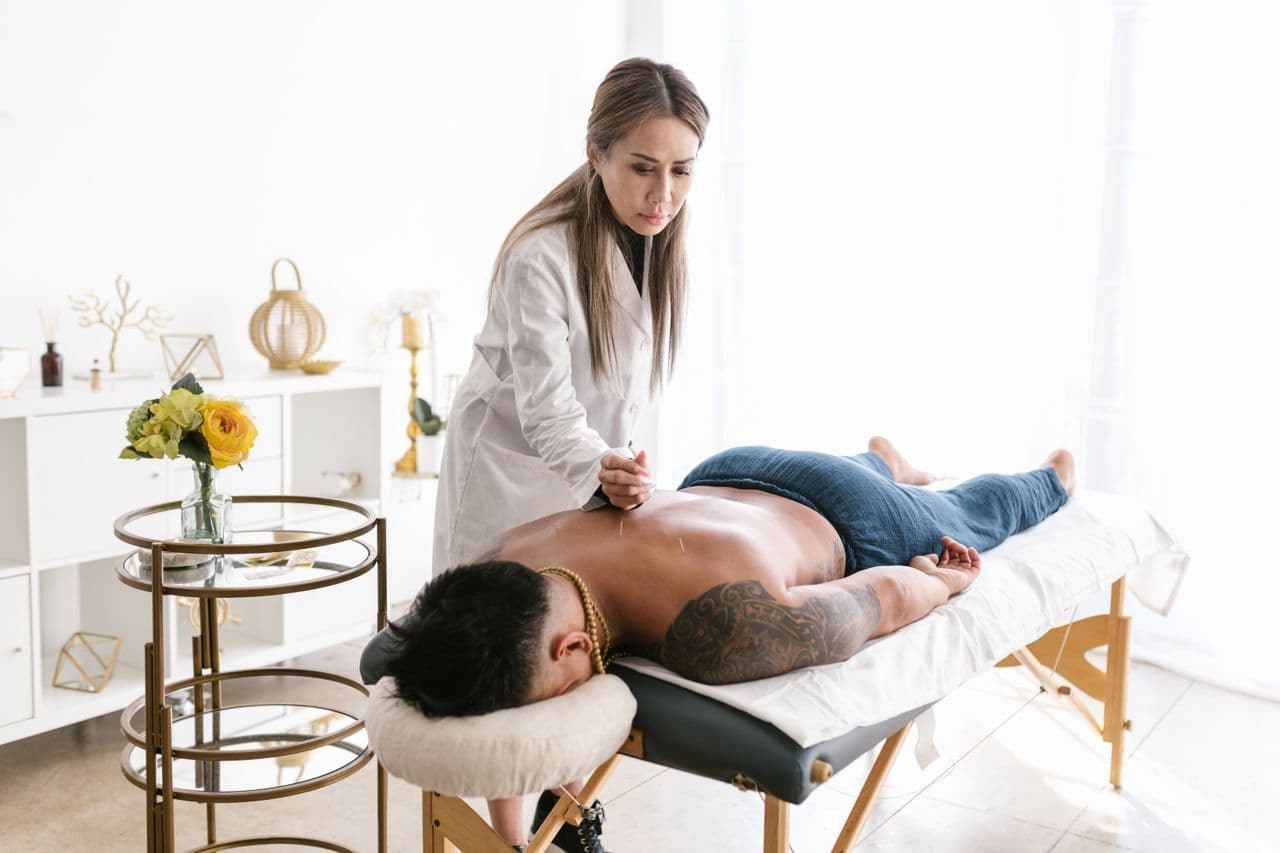
Acupuncture may be worth considering when chronic pain is not simply a tight muscle. It is commonly explored for chronic low back pain, neck pain, headache disorders, osteoarthritis-related discomfort, and some widespread pain patterns. The goal is usually to reduce pain intensity, calm sensitivity, and support function rather than force a dramatic overnight change.
A qualified acupuncturist should take a full history, ask about medications and medical conditions, explain needle safety, and set expectations. You should know why points are being selected, how many sessions are being suggested, and what changes you are tracking.
When Massage Makes More Sense
Massage may be the better starting point when tension is local and mechanical: tight neck and shoulders from desk work, training soreness, guarded muscles after stress, or the heavy feeling that improves when soft tissue is warmed and moved. It can also help people reconnect with areas they have been bracing or avoiding.
For chronic pain, pressure matters. More pressure is not automatically better. People with fibromyalgia, migraine sensitivity, inflammatory conditions, or post-viral fatigue may need gentle work, shorter sessions, and a therapist who listens carefully to flare patterns.
What the Evidence Says
The evidence comparison is uneven. Acupuncture has stronger support in some chronic pain guidelines, including chronic primary pain and chronic low back pain contexts. Benefits are usually modest, but they can be meaningful for the right person when combined with movement, education, sleep support, and appropriate clinical care.
Massage has a large research base, but recent reviews often find that certainty is low for many pain conditions. That does not mean massage is useless. It means the strongest claims should be avoided. For many people, massage is best framed as short-term symptom support and tension relief rather than a stand-alone chronic pain strategy.
Safety and Red Flags
Do not use either option to delay assessment of new or worrying pain. Seek clinical advice first if pain follows a fall or accident, wakes you at night and is worsening, comes with fever or unexplained weight loss, or is linked with numbness, weakness, bowel or bladder changes, chest pain, cancer history, or possible infection.
For acupuncture, ask whether the practitioner uses sterile, single-use needles. Mention blood thinners, bleeding disorders, immune suppression, pacemakers or implanted devices, pregnancy, fainting history, skin infection, or any serious medical diagnosis. For massage, avoid deep work over suspected clots, fractures, acute swelling, open wounds, fragile bones, or areas your clinician has told you to protect.
International and Local Credential Checks
Regulation varies widely. In the United States, acupuncture and massage requirements are usually state-based, so verify the practitioner license with the relevant state board. In the UK, acupuncture and massage are not generally regulated by law in the same way as statutory health professions, so PSA-accredited voluntary registers can be useful. In Ireland, check professional association membership, professional indemnity insurance, hygiene standards, and clear scope of practice. In Australia, acupuncture is regulated through the Chinese Medicine Board of Australia and Ahpra; massage credentials and rebates usually depend on association membership and health-fund rules.
For international clients, the universal checklist is simple: training, registration or license where applicable, insurance, informed consent, privacy standards, hygiene, a clear complaint route, and willingness to refer you back to medical care when symptoms fall outside their scope.
A Practical Four-Week Trial
Pick one main outcome before you begin: fewer headache days, better sleep, less morning stiffness, easier walking, reduced pain after work, or fewer flare-ups. Rate it before each session and again 24-48 hours later. This turns a vague wellness experiment into a useful decision.
If you are unsure, start with the option that matches the dominant pattern. For muscular tension, book massage and keep pressure moderate. For persistent pain, headaches, or sensitivity, book acupuncture with a qualified practitioner. If both seem relevant, space sessions apart so you can tell what is helping.
Bottom Line
Try massage first if your tension feels muscular, local, and touch-responsive. Try acupuncture first if pain is chronic, recurrent, headache-linked, widespread, or shaped by stress and sleep disruption. Use local credential checks, track outcomes, and keep medical assessment in the loop when pain is new, severe, unexplained, or changing.
Educational Note
This article is for educational purposes only and does not replace personal medical advice, diagnosis, or urgent care. Chronic pain deserves an individual assessment, especially when symptoms are new, changing, severe, or affecting daily function.