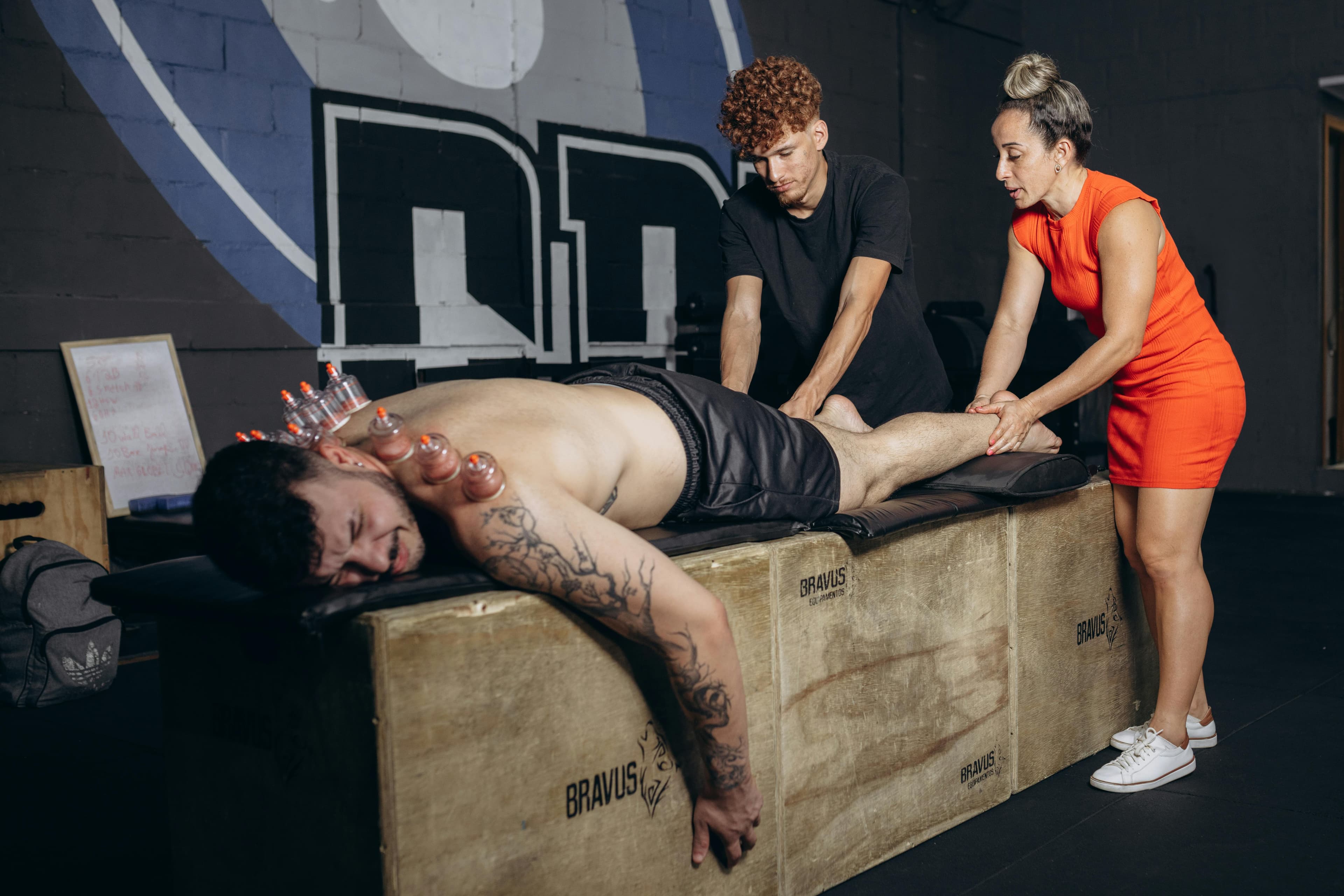
What Is Sports Therapy?
Sports therapy is a clinical rehabilitation discipline that blends manual therapy, exercise prescription, and movement analysis to support recovery from musculoskeletal injury and enhance physical function. Practitioners assess how movement patterns, muscle imbalances, and tissue damage contribute to pain or limitation, then design individualized programs to restore strength, mobility, and confidence in movement.
Unlike general fitness training, sports therapy is grounded in clinical reasoning about tissue healing and biomechanics. Practitioners work across a spectrum of clients, from competitive athletes seeking return-to-sport protocols to non-athletes managing chronic pain or mobility loss. The approach is fundamentally collaborative: sports therapists often work alongside doctors, physiotherapists, and other healthcare providers, ensuring rehabilitation complements medical care without replacing it.
The scope of sports therapy typically includes assessment of injury mechanism and movement quality, application of manual techniques such as soft tissue mobilisation, joint mobilisation and manipulation, prescription of therapeutic exercise, advice on load management and activity modification, and education about tissue healing and injury prevention. The goal is always to return individuals to their desired level of activity safely and sustainably.
How Does It Work?
Sports therapy operates on the understanding that musculoskeletal pain and dysfunction arise from a combination of tissue damage, weakness, movement dysfunction, and sometimes psychological factors. Rather than addressing symptoms in isolation, the approach considers the whole person and their activity demands.
The mechanism of benefit comes through several pathways. Manual therapy techniques are thought to reduce pain through mechanisms such as descending pain inhibition and mechanical restoration of joint and soft tissue mobility. Therapeutic exercise promotes tissue adaptation and healing, particularly through controlled progressive loading that challenges muscles and tendons to become stronger and more resilient. Movement re-education helps correct faulty patterns that contributed to injury in the first place, reducing re-injury risk.
Crucially, sports therapy emphasizes progressive challenge and adaptation. Rather than simply resting an injury, practitioners use graded exposure to load and movement. This stimulates tissue repair at a cellular level and helps the nervous system regain confidence in movement. The approach is evidence-based where strong evidence exists, though like all clinical practice, it also incorporates clinical judgment developed through training and experience.
One key principle is individualisation. Two athletes with the same diagnosis may receive quite different programs based on their movement patterns, training history, and return-to-activity goals. This tailoring is what distinguishes clinical sports therapy from generic exercise programs.
What Does a Session Involve?
A typical sports therapy session begins with an intake or reassessment, where the practitioner asks about your current symptoms, activity level, and what has changed since the last visit. They will observe how you move, perform specific tests to assess strength and range of motion, and may palpate (feel) relevant tissues to gather information about pain and restriction.
Based on this assessment, the practitioner may apply manual techniques such as soft tissue massage or mobilisation to reduce stiffness and pain, guide you through targeted stretches or exercises, or discuss modifications to daily activities and training. Sessions typically last 30 to 60 minutes, depending on your location and the practitioner's style.
Critically, sports therapy is not only what happens in the clinic. Your practitioner will prescribe a home exercise program tailored to your condition. Adherence to these exercises between sessions is often the most important factor in recovery. You might be asked to perform strengthening exercises several times per week, stretch regularly, or gradually increase your activity level according to a planned progression.
As you progress, sessions may shift focus from pain management and early rehabilitation to more challenging movement patterns, sport-specific conditioning, or prevention work. Regular reassessment ensures the program evolves with your recovery and that you are making progress toward your goals. Your practitioner should explain their reasoning and keep you informed about expected recovery timelines and what to do if symptoms change.
Who May Benefit?
Sports therapy is suitable for a wide range of people. Competitive athletes benefit from specialized return-to-sport protocols and performance-focused rehabilitation. Recreational athletes seeking to maintain activity without injury similarly find value in injury management and prevention.
Beyond athletes, many non-athletic individuals with musculoskeletal pain benefit from sports therapy approaches. People with chronic lower back pain, long-standing neck stiffness, or persistent joint discomfort often improve with targeted strengthening and movement retraining. Those recovering from workplace injury or managing repetitive strain find the structured, evidence-based approach helpful.
Individuals with specific diagnoses such as muscle strain, tendon pain, or sciatica may be referred by their doctor or may self-refer. Older adults seeking to maintain mobility and prevent falls can work with sports therapists on balance, strength, and movement confidence. People returning to activity after prolonged illness or inactivity benefit from gradual, supported reconditioning.
However, not everyone is a good fit at every time. Acute severe injuries, fractures, or undiagnosed neurological symptoms warrant medical evaluation first. Those with unstable medical conditions or recent surgery should consult their doctor before beginning sports therapy. Additionally, if you are simply seeking general fitness improvement without injury history or pain, a personal trainer or fitness professional might be more appropriate than a clinical sports therapist.
What Does the Evidence Say?
The research foundation for sports therapy has strengthened considerably in recent years. Systematic reviews and meta-analyses provide strong evidence that structured rehabilitation exercise supports recovery from muscle strain, helping individuals return to activity with lower re-injury rates compared to minimal intervention.
For tendinopathy, strong evidence supports progressive resistance training and load management as core therapeutic strategies. Studies show that gradual, controlled strengthening leads to tissue adaptation and pain reduction, particularly when combined with activity modification. This evidence has substantially shifted clinical practice away from prolonged rest toward active rehabilitation.
Chronic lower back pain research demonstrates robust evidence that exercise addressing core stability, postural control, and movement quality reduces pain and disability. Multiple studies confirm that combining exercise with manual therapy and behavioral guidance yields superior outcomes compared to passive treatment alone.
Neck pain (cervicalgia) similarly shows strong evidence for combined manual therapy and targeted exercise, with benefits sustained over time. For patellar tendinitis, evidence supports quadriceps strengthening protocols tailored to the individual's training demands.
For sciatica, the evidence base is moderate. While exercise and mobility work show promise in reducing symptoms, individual variation is greater and some cases require more intensive intervention. In general, current evidence suggests early mobilisation and structured exercise are preferable to prolonged immobilisation.
It is important to note that evidence quality and strength vary by specific technique and population. Some manual therapy techniques have stronger evidence than others. Additionally, much research focuses on specific diagnoses; for rare or complex conditions, evidence may be more limited. Your practitioner should be able to discuss what evidence exists for your particular situation and explain how it informs their approach. Evidence-based practice also incorporates clinical expertise and your individual values and circumstances.
Safety and Considerations
Sports therapy is generally safe when delivered by qualified, appropriately trained practitioners. However, as with all hands-on healthcare, certain precautions are important.
Individuals with acute severe injury, suspected fractures, or unexplained neurological symptoms should seek medical evaluation before sports therapy. Those with a history of blood clots, osteoporosis, or on blood-thinning medications should inform their practitioner, as some manual techniques may be contraindicated or require modification. Recent surgery requires medical clearance before rehabilitation begins.
During treatment, you should always communicate with your practitioner about pain or discomfort. Sports therapy should not be acutely painful, though some exercises or stretches may feel challenging or cause mild temporary soreness. Sharp pain, numbness, or unusual symptoms warrant immediate discussion and possible cessation of that technique.
Sports therapy is not designed to replace medical diagnosis or treatment. If your practitioner suspects a serious underlying condition, fracture, or neurological issue, they should refer you to appropriate medical professionals. Similarly, if you are on medication or have complex medical conditions, your sports therapist should work collaboratively with your doctor to ensure treatment is safe and complementary.
Home exercise adherence carries its own safety dimension. Exercises should be performed correctly; your practitioner should demonstrate proper form and provide written or video guidance. Doing exercises incorrectly or progressing too rapidly can slow recovery or cause setbacks. If something does not feel right, stop and discuss it at your next session.
Finally, be cautious of practitioners who make grand claims about "curing" conditions or suggest you discontinue prescribed medications. Evidence-based sports therapy operates within realistic timeframes, respects medical diagnoses, and positions itself as one tool within a broader healthcare approach.
How to Find a Qualified Practitioner
Finding a qualified sports therapist requires some investigation, as professional standards and registration vary by country and region.
In the United Kingdom, look for practitioners registered with the CIMSPA (Chartered Institute for the Management of Sport and Physical Activity) or REPS UK, or those holding qualifications from accredited universities or training providers. Many sports therapists are also registered with the Health and Care Professions Council (HCPC) if they hold appropriate credentials. Professional bodies such as the Sport and Exercise Science Association maintain directories of qualified members.
In other countries, similar regulatory bodies exist. In the United States, the National Athletic Trainers' Association (NATA) credentials athletic trainers; while not all sports therapists are ATs, this is one quality indicator. In Australia and other Commonwealth nations, check with equivalent regulatory authorities. When searching, look for practitioners with relevant university qualifications, professional registration, and ongoing continuing education.
When contacting a practitioner, ask about their qualifications, years of experience, and whether they have worked with your specific condition or type of athlete. Do not hesitate to ask about their approach and how they measure progress. A good practitioner will explain their reasoning and be transparent about what evidence supports their methods.
Consider referral from your doctor, physiotherapist, or coach if available. Personal recommendations from others in your sport or activity community can also be valuable. Many practitioners offer initial consultations or brief telephone calls to discuss whether they are a good fit for your needs.
Price and access matter too. Session costs vary widely; in some healthcare systems sports therapy is covered by insurance, while in others it is out-of-pocket. Ask about this upfront. Some practitioners offer telehealth for consultation or advice, which can increase accessibility. Finally, ensure you feel comfortable with the practitioner and their communication style, as the therapeutic relationship itself is part of effective treatment.